- Oak Brook:(630) 705-9999
- Chicago:(312) 920-8822
- Email:inquiry@vervecollege.edu
- Make a Payment
 Sign up
 Login
Login
- Home
- Programs
- Admission
- Resources
- ATI Entrance Exam Resources
- New E-Digital Library
- Refer a Friend
- School Newsletter
- Events
- Employers
- Job-Network
- Alpha Beta Kappa Candidates
- Verve College Library
- Graduation and Pinning Ceremony Photo Galleries
- Textbook Information
- Career Services
- Tutoring
- School Catalog
- FAQ
- Constitution Day Program
- Alumni
- Verve College Plans
- Financial Aid
- HEERF Reporting
- Satisfactory Academic Progress
- Apply For Financial Aid
- Net Price Calculator
- Return of Title IV Funds (R2T4)
- Financial Aid Office Code of Conduct
- Contact
- FAQs
- Verification Policy
- Vaccination Policy
- Student Right-to-Know Act
- Misrepresentation
- Information Security Program
- Academic Award Year
- Availability of Employee
- Cost of Attendance
- Health & Safety Exemption Requirement
- Students Rights and Responsibilities
- Leave of Absence
- Pell Formula
- Military Students
- Grants/ Scholarship Policy
- Contact Us
- Testimonials
- Blog
Is a Nursing Career Right For You?
Take The Free Quiz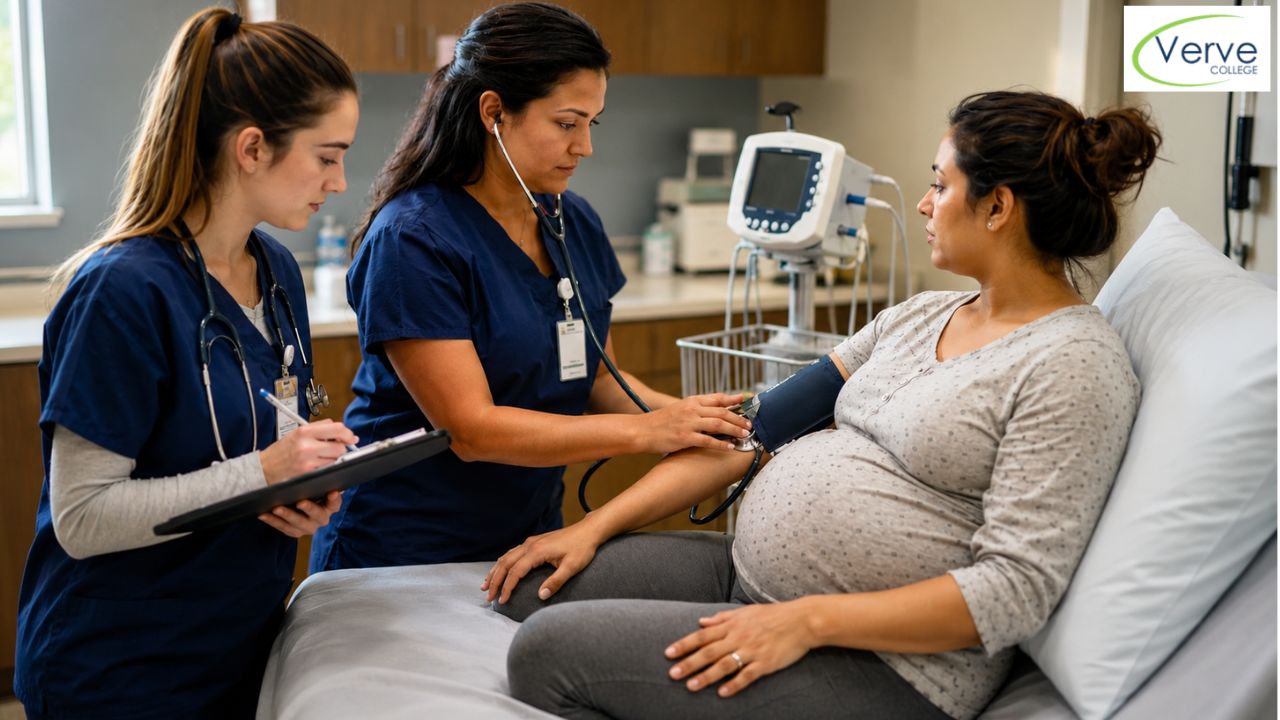
Preeclampsia Symptoms: Warning Signs Every Nursing Student Should Know
Preeclampsia Symptoms: Warning Signs Every Nursing Student Should Know
Pregnancy is not always straightforward. One of the most serious complications a nurse will encounter in maternal care is preeclampsia, a condition that can escalate quickly and put both mother and baby at risk. Yet many students enter clinical settings without fully understanding what to look for.
This article breaks down the key preeclampsia symptoms, explains why they happen, and shows you how recognizing them early can make a real difference in patient outcomes.
Key Takeaways
- Preeclampsia is a pregnancy complication marked by high blood pressure and signs of organ damage, most often affecting the kidneys
- It typically develops after 20 weeks of pregnancy and can worsen rapidly without intervention
- Common warning signs include sudden swelling, severe headaches, vision changes, and upper abdominal pain
- Nurses play a direct role in monitoring blood pressure and catching early symptom progression
- Understanding cardiovascular and kidney function through anatomy and physiology classes gives you a much stronger foundation for recognizing what is actually happening inside the body
- Early recognition is not just a clinical skill. It is a patient safety priority
What Is Preeclampsia and Why Does It Happen?
Preeclampsia is a pregnancy-related condition where blood pressure rises to dangerous levels, typically above 140/90 mmHg, and the body begins showing signs of organ stress. It most often affects the kidneys, but can also involve the liver, brain, and blood clotting system.
The exact cause is not fully understood, but researchers believe it starts in the placenta. During a normal pregnancy, blood vessels develop to supply the placenta with oxygen and nutrients. In preeclampsia, that process does not work correctly, leading to poor blood flow and a cascade of complications throughout the body.
This is why a solid understanding of how the cardiovascular and renal systems work is so important for nursing students. When you understand the physiology behind blood pressure regulation and kidney filtration, the symptoms start to make much more sense clinically.
Preeclampsia Symptoms You Need to Recognize
Not every patient with preeclampsia will look obviously unwell. That is part of what makes it dangerous. Here are the warning signs nurses must know.
Elevated Blood Pressure
A blood pressure reading of 140/90 mmHg or higher on two separate occasions, at least four hours apart, is a defining feature of preeclampsia. Consistent monitoring is key. A single high reading is not always alarming, but a pattern is.
Protein in the Urine
This is called proteinuria, and it signals that the kidneys are under stress. The kidneys are supposed to filter waste from the blood while keeping proteins inside. When protein leaks into urine, it means the filtration system is breaking down.
Sudden or Severe Swelling
Some swelling during pregnancy is normal. But sudden or excessive swelling, especially in the face, hands, and feet, can indicate fluid retention related to preeclampsia. Pay attention to how quickly swelling appears and whether it is unusual for that patient.
Severe Headaches
These are not typical tension headaches. Preeclampsia-related headaches are often described as persistent, throbbing, and unresponsive to common pain relief. They result from increased pressure affecting the blood vessels in the brain.
Vision Changes
Blurred vision, seeing spots, flashing lights, or temporary loss of vision are all red flags. These occur because the elevated blood pressure affects blood flow to the retina and brain. This symptom should never be dismissed.
Upper Right Abdominal Pain
Pain or tenderness under the right side of the ribcage can signal that the liver is being affected. This is a more advanced symptom and indicates the condition may be progressing toward a serious complication called HELLP syndrome, which involves breakdown of red blood cells, elevated liver enzymes, and low platelet counts.
Nausea, Vomiting, and Decreased Urine Output
These can accompany the more obvious symptoms and often indicate worsening kidney or liver involvement. Decreased urination means the kidneys are struggling to filter blood properly.
Gestational Hypertension vs. Preeclampsia: Understanding the Difference
Students often confuse gestational hypertension with preeclampsia. Gestational hypertension refers to high blood pressure that develops during pregnancy without organ involvement or proteinuria.
Preeclampsia goes further. It includes that elevated blood pressure plus signs that the body’s organs are being affected. Gestational hypertension can progress to preeclampsia, which is why ongoing monitoring matters so much in prenatal nursing care.
Knowing this distinction will serve you well in clinical settings and on licensing exams.
The Nurse’s Role in Recognizing and Responding
Nurses are often the first point of contact when a patient reports feeling unwell. In maternal care, that means catching changes early, before a situation becomes an emergency.
Your responsibilities in this area include:
- Monitoring blood pressure at every prenatal visit and documenting trends
- Reviewing lab values for signs of kidney or liver dysfunction
- Asking about headaches, vision changes, and swelling in a clear, conversational way
- Escalating concerns to the supervising provider promptly
- Educating patients on what symptoms to watch for at home
Students enrolled in practical nursing programs learn these monitoring and assessment skills as part of their hands-on clinical training. These are not just test questions. They are real responsibilities that affect patient safety.
Why Foundational Knowledge Makes You a Better Nurse
Preeclampsia is not just a list of symptoms to memorize. It is a condition that involves the cardiovascular system, the kidneys, the liver, and the placenta all at once. When you understand how these systems interact, you can anticipate what might go wrong next instead of just reacting to what is already happening.
This kind of thinking develops over time, and it starts with building the right foundation. That is exactly what coursework in anatomy and physiology is designed to do. Students who come into nursing programs with that background tend to connect clinical information faster and with more confidence.
Conclusion
Preeclampsia is one of those conditions where early recognition directly saves lives. As a future nurse, knowing what to look for and when to act is part of your core role in maternal health care.
The warning signs covered here, from elevated blood pressure and protein in the urine to headaches, swelling, and vision changes, are not things to glance at once and forget. They are patterns you will watch for throughout your nursing career.
If you are preparing to work in maternal-child nursing or any clinical setting, building strong clinical knowledge starts well before you walk into a hospital. Programs like licensed practical nurse programs at Verve College are designed to give you that grounding in a structured, practical way. The more you understand now, the more prepared you will be when it counts.
Get Your Nursing Career Training Readiness Score Now!
Frequently Asked Questions (FAQs)
1. What are the earliest signs of preeclampsia a nursing student should know?
The earliest signs include elevated blood pressure, mild swelling in the hands and face, and protein in the urine. These may appear subtle at first, which is why consistent monitoring during prenatal visits is so important. Catching these patterns early gives medical teams time to intervene before symptoms worsen.
2. Can preeclampsia develop without obvious symptoms?
Yes, and this is what makes it particularly dangerous. Some patients have significantly elevated blood pressure without feeling unwell at all. That is why routine blood pressure checks and urinalysis during pregnancy are not just standard procedure. They are frontline detection tools that nurses use at every visit.
3. How do I prepare to handle maternal health complications like preeclampsia in nursing school?
Start by building a strong understanding of how the cardiovascular and renal systems work. Clinical coursework in a structured nursing program will teach you how to monitor patients, interpret lab results, and recognize symptom progression. Verve College offers practical nursing training that covers these maternal health concepts in a hands-on, career-focused environment.
Most Popular Blogs Posts
High-Fidelity Simulation in Nursing: How Realistic…
September 24, 2026 Read More
How to Compare Nursing Programs Before…
September 23, 2026 Read More
Thermoregulation: How the Body Regulates Temperature
September 23, 2026 Read More
Nursing Grants vs Scholarships: What’s the…
September 22, 2026 Read More